

In addition to professional qualifications – the so-called „hard facts“ – „soft skills“ also play an important role in ensuring sustainable recruitment within a company. These are validated through scientifically sound aptitude assessments, which are a key focus at HR Consult Group AG. But when and where did aptitude assessment actually begin? How has it developed?
Throughout world history, there are many references to early pioneers of aptitude testing. One example is ancient China, where high-ranking civil servants were selected using a standardised selection procedure. Candidates had to demonstrate proficiency in the five arts and also prove their knowledge of rites and public ceremonies. The examinations were set to a very high standard, with the result that the proportion of candidates ultimately accepted was extremely low.
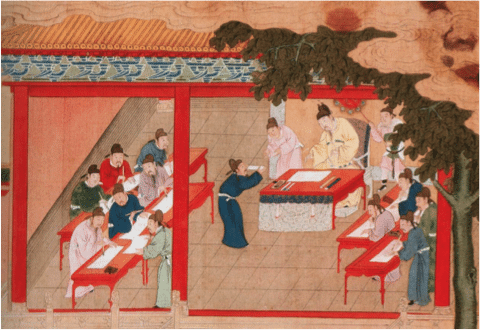
Source: Wikipedia(SONGDYNASTIE.JPG)
Sir Francis Galton (1822–1911) of England is recognised as one of the most important pioneers in the history of aptitude testing. He made a name for himself through his versatility across various disciplines. These included differential psychology, of which Galton was a co-founder. This field deals with the differences between individuals in terms of psychological traits and states. To this end, he developed testing methods capable of measuring psychological traits. He strove to quantify these traits as precisely as possible and focused on both intellectual abilities and personality traits. Throughout this work, he always kept his goal of improving the human race firmly in mind.
The principle, still used today, of describing people in terms of the deviation of their „measured value“ from the mean of a reference group was also developed by him.
From 1884 onwards, anyone interested could have their psychological traits assessed by him in London. Key features of this aptitude assessment included fundamental traits, such as observing behaviour whilst solving difficult tasks and assessing one’s self-image and how others perceive them.
The first methods of standardised personality assessment emerged at the beginning of the 20th century through empirical psychological approaches. This was followed by an increase in standardisation and systematisation. These early personality tests were mainly used to distinguish between well-adjusted and functional individuals and those exhibiting deviant behaviour.
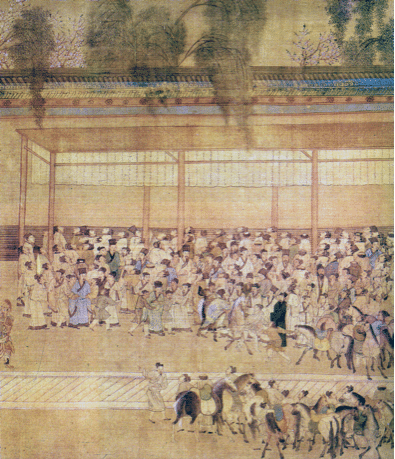
Source: Wikipedia (BEAMTENPRÜFUNGEN1.JPG)
The first personality tests, which originated in the United States, were intended for use in military psychological assessments or for addressing issues in clinical psychology. To a large extent, they measured psychological constructs.
The first career-related assessment methods began to be developed from 1920 onwards. These methods already focused on intellectual characteristics. They were used to determine suitability for a particular profession or to predict career success. The first significant test of this kind was developed at the Carnegie Institute of Technology in Pittsburgh. It was based on around 1,000 questions relating to various vocational interests, which continue to serve as a source for new tests to this day.
The use of clinically oriented personality tests for military purposes had already proved successful, which in turn led to the development of tests for psychopathological disorders (pathologically altered consciousness, memory and emotional or psychological functioning). The MMPI (Minnesota Multiphasic Personality Inventory) was devised specifically for this purpose. The California Psychological Inventory (CPI) was subsequently introduced as a procedure closely modelled on the MMPI, but which was primarily used for the selection of senior officers.
Our next article in this series will cover the subsequent course of events right up to the present day.
If you have any further suggestions or questions on this topic, please feel free to contact us at k.rasthofer@senator-partners.de
About the author

After completing his degree in Automotive Engineering and Industrial Engineering, he began his career in the automotive industry in the fields of sales, development and marketing, and also spent a year in Japan working for one of the largest automotive suppliers.
He then moved to a world-renowned premium car manufacturer, where he served as a marketing officer responsible for product marketing in Japan and South America, and as a marketing officer responsible for marketing strategy in North and South America.
In 1994, he decided to set up his own business and founded a recruitment consultancy in Munich, which he has been developing and expanding for over 20 years. As managing director, his main areas of focus are, naturally, the automotive sector and mechanical and plant engineering.
His PhD in the field of aptitude assessment perfectly complements his areas of expertise, particularly with regard to HR and management consultancy. His thesis focuses on identifying and demonstrating typical personality traits among engineers, as well as defining areas for development to ensure a successful career.
These are scientifically derived and presented in the book *Aptitude Testing in Practice*.
At the same time, his focus is on building networks and cooperation models, as well as the ongoing development of systems and processes in HR consultancy.
Over the past 20 years in the field of HR consultancy, he has developed several brands that continue to operate successfully in the market to this day.

#/media/File:Ming-Beamtenpr%C3%BCfungen1.jpg)