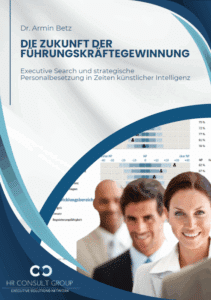

Artificial intelligence (AI) has played an increasingly important role in the world of HR consulting in recent years. With technological progress and the increasing digitalization of the working world, the use of AI in HR consulting opens up new opportunities, but also creates new challenges. In this blog article, we examine how AI is revolutionizing HR consulting, what potential it offers, and what hurdles need to be overcome.
1. AI in HR consulting: An introduction
AI technologies in HR consulting range from algorithms for matching resumes with job descriptions to advanced analysis tools that can assess applicants' personality traits and skills. These technologies promise more efficient and accurate candidate selection, which can lead to a better fit between employers and employees.
2. Opportunities: Increased efficiency and better matching
Perhaps the most obvious advantage of AI in HR consulting is increased efficiency. AI tools can process and analyze huge amounts of data—resumes, job descriptions, applicant profiles—in a matter of seconds. This leads to faster and often better candidate selection. In addition, AI enables more precise matching of applicants and job offers by selecting not only on the basis of qualifications and experience, but also on the basis of personality traits and cultural fit.
3. Personalized experiences and expansion of the talent pool
AI technologies enable recruiters to create personalized experiences for applicants. AI-powered platforms can match candidates more effectively with suitable job offers. AI also opens up the possibility of discovering hidden talent and expanding the talent pool by identifying candidates who may have been overlooked because they do not meet traditional criteria.
4. Challenges: Ethics and data protection
However, these advantages also come with challenges. One of the biggest concerns surrounding AI in recruitment is the issue of ethics and data protection. Algorithms can reflect unconscious biases present in the training data, which can lead to unfair treatment of certain groups of applicants. Data protection is also a critical issue, as AI systems rely on large amounts of personal data.
5. Continuous adaptation and integration
Another challenge is the integration of AI systems into existing HR consulting processes. Not all companies and consulting firms are technologically advanced enough to seamlessly integrate AI. In addition, the use of AI requires continuous adaptation and updating of systems to keep pace with the latest developments.
6. Conclusion
The integration of artificial intelligence into HR consulting offers immense opportunities, from more efficient processes to improved matching of candidates and employers. At the same time, the challenges should not be underestimated, especially with regard to ethical issues and data protection. The future of HR consulting will depend heavily on how well these technologies can be utilized and integrated into existing systems, as well as how effectively the associated challenges are addressed. In an ever-changing job market, AI will undoubtedly play a key role in meeting the needs of employers and employees alike.