
A management audit is defined as a systematic assessment or analysis of managers’ skills and performance potential. The focus is on the organisation’s needs and success.
These audits are used, for example, when the management team needs to be assessed to determine whether it is up to the current challenges. What measures can be taken to strengthen the management team? Another application is in the context of integrating newly acquired companies. Do the management teams fit together? Such an audit can also support the targeted development of members of a talent pool. In addition, there are a wide range of other potential applications.
This article explains how to prepare for and carry out a management audit.
In order to meet the challenges of a management audit, certain preparations need to be made.
The first step is to define the objective of the audit. It must be made clear what the intended outcome of the management audit is to be.
Depending on the intended outcome, the company identifies the staff members who will take part in the audit. At the same time, the subject areas on which the company wishes to receive feedback are defined and discussed. A questionnaire is then drawn up for these areas, tailored specifically to the topics under review. Based on this information and these guidelines, the team of consultants who will carry out the management audit is put together. A central point of contact from this team is appointed as project manager, who is available to the company at all times.
The smooth conduct and evaluation of the management audit are based on a timetable agreed with the parties involved.
Once all the preparations have been made, the audit begins with an introductory briefing for the participating employees of the company. To start with, the participants complete an aptitude assessment. This is an online self-assessment tailored to the participant’s specific role. This self-assessment is benchmarked against recognised best-practice or standard profiles. The results of this benchmarking highlight the participant’s suitability, strengths and areas for development in relation to their current role.
As part of an extended recruitment process, multi-profile matching can be used to assess the candidate’s suitability for other potential roles.
Using the results of the aptitude assessment, structured interviews are then conducted in accordance with the specific questionnaire drawn up beforehand. In line with the dual-control principle, two experienced consultants always take part in each interview. The findings are discussed with the project manager.
If several teams of consultants conduct the interviews, the project manager will validate the results once again.
Key findings are also summarised by the project manager and presented to the company.
The second part of this topic will focus specifically on the evaluation of a management audit. How is the assessment carried out? Which findings are intended for staff, and which are important for the organisation?
About the author
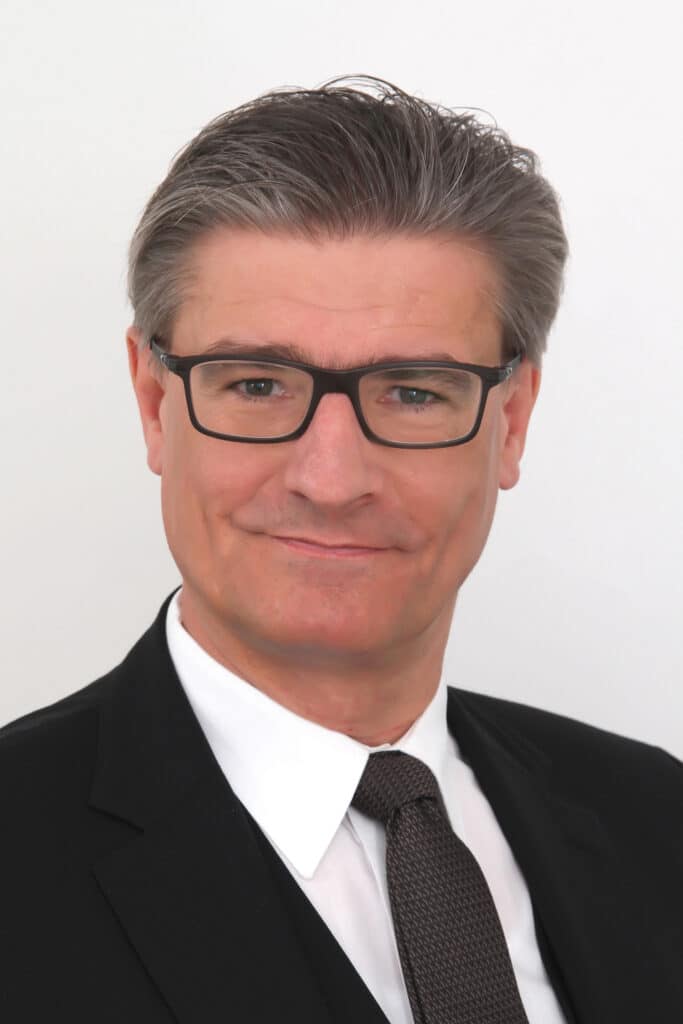
As part of his officer training, he studied electrical engineering, graduating with a degree in engineering. Whilst working, he undertook a further course of study, graduating with a degree in industrial engineering, specialising in „Organisation and Planning“ and „Marketing“.
After his career as an officer, he moved to a subsidiary of EADS in Paris, where he was responsible for international marketing, communications, trade fairs and exhibitions for several years.
Back in Germany, his career at a technology company took him from the Strategy department to head of a product division, and eventually to the executive board. There, he was responsible for sales, technical studies, strategy and business development.
In 2010, he joined Rheinmetall to take up the post of COO at one of its subsidiaries. After two years, he was appointed divisional head, taking charge of a division with 2,500 employees. This phase was rounded off by extensive and successful restructuring programmes in Germany and Switzerland, the successful establishment of a joint venture in the USA, and his representation on several political and technological committees.
He drew on the experience he had gained in the fields of technology and general management to take up positions on the supervisory boards of both HR Consult Group AG and the technology company MECOMO AG. Having supported the strategic development of HR Consult Group AG over several years, he was then convinced to take up the position of Executive Board member at HR Consult Group AG. For one thing is key: „It’s all about people.“