
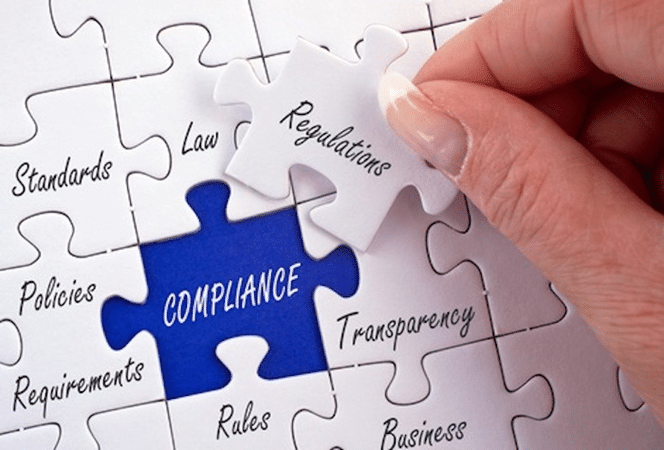
Legal requirements must be taken into account when developing and implementing codes of conduct.
1. Introduction
As companies expand into developing and emerging markets, considerations regarding corporate social responsibility are becoming increasingly important. In many host countries, companies are frequently confronted with unfamiliar realities: foreign cultural norms, legal uncertainty, volatile political conditions, unpredictable administrative bodies, or indeed irresponsible treatment of the environment, corruption and the violation of internationally recognised labour standards and human rights.
The company must actively engage with these framework conditions, as it is expected to uphold the high standards of responsible business practices customary in its home country within its sphere of influence (suppliers, employees, locations, etc.) as well as in the countries where it sources, manufactures and exports goods, to apply the same high standards of responsible business practices that are customary in its home country.
A well-established tool for preventing potential adverse effects caused by stakeholders within a company’s sphere of influence is the so-called Code of Conduct. Through a bespoke Code of Conduct, a company sets out specific guidelines for action to ensure compliance with its core ethical and moral obligations. This tool has both a regulatory component (for suppliers) and a communicative component (for stakeholders) and, when developed in a practical manner and implemented credibly, can make a significant contribution to the company’s credibility.
2. Reasons for introducing codes of conduct
On the one hand, the reasons for introducing a Code of Conduct lie in the aforementioned risks, which stem from the internationalisation of companies and increasing globalisation. On the other hand, these reasons arise from regulatory requirements such as the US Sarbanes-Oxley Act. This Act requires listed companies in the US to ensure that misconduct in the areas of accounting, banking and white-collar crime – which covers a broad spectrum of potential offences – is detected and rectified as quickly as possible. German companies are subject to the obligations of the Sarbanes-Oxley Act if their parent company is listed on a stock exchange in the US.
The measures required to comply with the provisions of the Sarbanes-Oxley Act are implemented within companies in the form of codes of conduct. Specific guidelines on conduct are intended to reduce or minimise companies’ liability risks.
In Germany, there is a growing trend for companies – even those that are not themselves listed on the stock exchange or do not have a listed parent company – to commit to introducing codes of conduct or setting up reporting systems for breaches of the rules. There are a wide variety of reasons for this form of voluntary commitment – ranging from planning an initial public offering to the realisation that a code of conduct is a modern instrument of „corporate governance“ that stakeholders expect.
3. Objectives and content of codes of conduct
Whilst the objectives of codes of conduct are largely similar, their content can vary considerably from one company to another.
The primary objective – although often formulated in very different ways – is to minimise liability risks by setting out specific rules of conduct. These generally relate both to different organisational units (e.g. sales, human resources, etc.) and to different processes. In a sense, the company „shifts“ the risks arising from misconduct onto the individuals concerned, thereby availing itself of a means of exculpation. The fact that this is only of a relative nature is ultimately demonstrated by the fact that, in the media, it is usually the company and not the individual employee who is pilloried – with the exception of members of the executive board or senior management.
The content, on the other hand, generally varies considerably: some companies limit themselves to briefly and concisely requiring their employees to comply with applicable laws and internal guidelines and to report any breaches. In most companies, however, it can be observed that the Code of Conduct contains a large number of specific, situation-specific rules of conduct which, taken together, go far beyond what is required by the Sarbanes-Oxley Act. Here are a few examples:
- Confidentiality obligations
- Acceptance of gifts
- Prohibition of alcohol, drugs and intoxicating medicines
- Use of company facilities (telephone, machinery, vehicles)
- Rejection of child labour
- Breaches of environmental protection legislation
- Employment of family members by competitors
The code of conduct is also accompanied by sanctions that are imposed in the event of breaches of the code. These range from simple disciplinary measures to summary dismissal and the filing of a criminal complaint.
Another key component of codes of conduct is what are known as „whistleblowing systems“, through which breaches are reported. These usually take the form of hotlines or dedicated email addresses – anonymity and discretion are fundamental requirements here, without which such a reporting system would hardly function in practice (after all, who would want to be seen as a „snitch“, even if they are obliged to report breaches under the Code of Conduct?).
When comparing the development of codes of conduct between the USA and Germany, the high number of specific rules of conduct in US codes of conduct can be explained historically by the fact that labour law in the USA is significantly less heavily regulated than we are accustomed to in Germany. However, even in Germany, there is occasionally a marked tendency amongst compliance officers to „over-regulate“, although many of the regulated circumstances are already covered by both substantive employment law and the case law on employment law, which has been evolving for decades.
About the author

Eckart Achauer studied law and business administration, followed by postgraduate studies leading to a Master of Business Administration (MBA). He undertook further professional development alongside his work to qualify as a European Quality Manager (DGQ), a mediator specialising in commercial mediation, and a Certified Compliance Manager (TÜV).
He spent around 10 years in the international insurance industry, holding various management positions within a Swiss insurance group (claims department, sales, assistance), before moving into management and business consultancy in 1997.
As a consultant and managing director of various consultancy firms, Mr Achauer has specialised in organisational and process optimisation, as well as in the development and implementation of management systems – quality management, risk management and compliance management.
At Senator Executive Search Partners, Mr Achauer is responsible for the Compliance Management division. As part of compliance audits, he analyses organisations„ “compliance fitness’, raises awareness and provides training for management, executives and staff, and supports companies in developing and implementing bespoke compliance management systems. In doing so, he always takes into account the specific risk profile of each company. Thanks to his many years’ experience as a manager and consultant, he is thoroughly familiar with the practical challenges faced by businesses.