What distinguishes a successful company from a less successful one? Of course, it requires products or services that meet market demands at reasonable prices. Beyond that, however, it is also about leadership, organisation and motivating the team, as well as communicating effectively with that team.
It takes a good leader – the captain – as well as the right culture. Together with a small management team, the leader creates incentives and a motivating atmosphere for open discussions in which everyone’s resources are brought to bear. Through their behaviour, the manager demonstrates that they are serving the overarching goal of the entire organisation and maintains a broad overview at all times. They defuse power struggles and minimise political manoeuvring within the organisation. Furthermore, they define a clear division of roles and decide when strategic changes – also known as paradigm shifts – are necessary. Everyone agrees to break down the overall strategy into several sub-strategies.
This scenario is more complex in multinational teams because cultural sensitivities exist there and present an additional challenge. For example, many Asian people tend to be less direct when formulating and setting goals, and at first glance often appear less proactive than, for instance, their German-speaking colleagues. This can lead to misunderstandings arising from false expectations. It is better to foster a respectful approach to one another that takes intercultural differences into account, whilst making full use of conflicts to achieve objectives effectively.
„Diversity is an asset“ is the motto: this approach ultimately plays a crucial role in the success of sub-strategies and in achieving the overarching goal.
Team spirit – easier said than done:
Team-building is not a simple tool. A key risk lies in the differing rules of the game and motivations. These must be identified in detail and aligned with the overall objective. It is important that the results are attributed to the team as a whole, rather than to individuals. Existing conflicts and their resolution are seen as a necessary form of respectful yet goal-oriented communication on the path to success. Informal and direct, yet always clear, dialogue is helpful here. Added to this is an appreciation of different personalities, such as mavericks, specialists and generalists.
But how, in practice, can such a team spirit be achieved?
Perhaps the following tips will help:
Structure: It is essential to ensure that all international staff are properly and consistently connected to head office, combined with a good education and appropriate training.
Leadership: This should be adapted to the situation, be guided by the principle of „leading by example“, and be based on mutuality, or so-called reciprocity. A dialogue might, for example, begin as follows: „Please put yourself in my shoes. How would you act in my position to achieve our goals?“
Training: In addition, all staff should be involved in international projects and participate in as many best-practice processes as possible.
Authenticity: A good example of something with high potential for employees to identify with are specific examples of staff who have been both supported and challenged, and who have followed clear career paths within the company, both at home and abroad. Such examples foster a strong sense of identity and also provide an incentive for employees to follow in the footsteps of their promoted colleagues.
Career opportunities: Concrete prospects for an individual’s career are important, but these are not short-term; rather, they are designed for the medium and long term.
Particularly today, in an age of global, rapid and sometimes even redundant communication, these aspects play a particularly important role. Motivation and leadership make all the difference! Particularly in the context of matrix and project structures, which are becoming increasingly common, motivating each individual and leading the team effectively are essential keys to success, enabling a lasting sense of „team spirit“ to be achieved.
With the help of aptitude assessment tools, a candidate’s individual strengths can be precisely identified and their future career path optimally tailored to them. Job seekers are often unaware of exactly where their skills and abilities lie and may not even be looking for the job that is the perfect fit for them. A career profile match can open up entirely new ideas and perspectives in this regard.
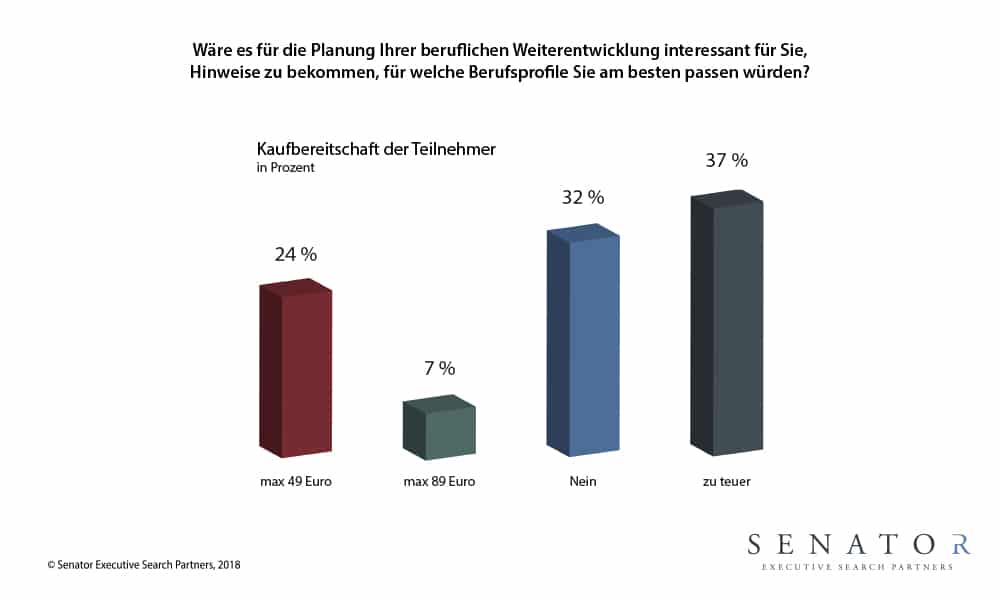
More than 10,000 participants took part in a survey conducted by HR Consult Group AG, which aimed to gauge current opinions on the service and image of recruitment consultancies. Among other things, the survey examined how well aptitude assessment procedures – and, in particular, the suggestions for suitable job profiles – are received by candidates.
Just under a third of candidates are willing to spend money on aptitude testing.
At 31 per cent, just under a third of survey respondents are willing to pay for a career profile recommendation. Almost one in four respondents would spend up to 49 euros on a career profile recommendation, whilst 7 per cent would even invest up to 89 euros. For more than a third, however, even 49 euros would be too expensive. At 32 per cent, just under a third of those surveyed have no interest at all in this advisory service.
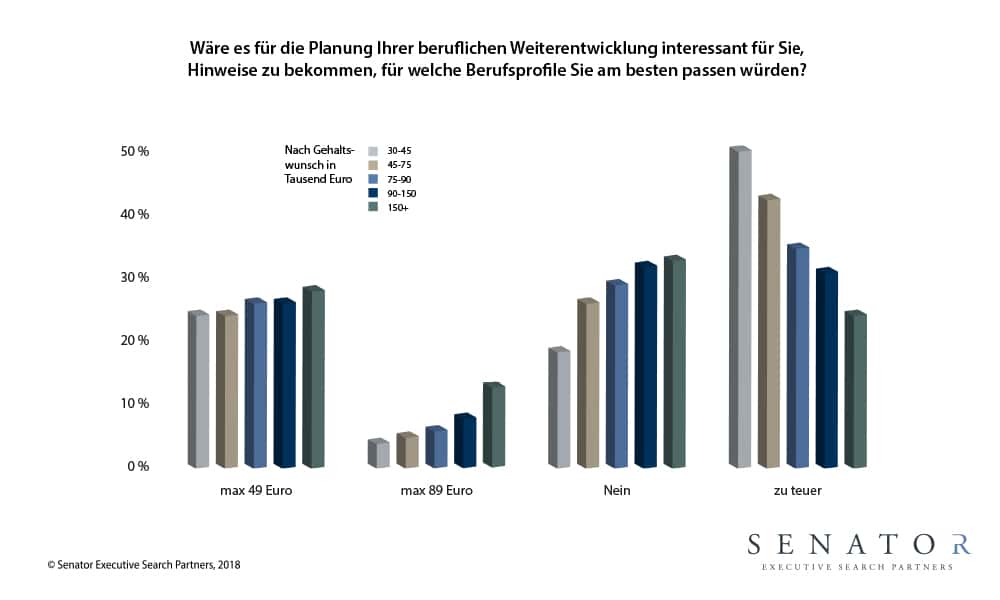
If we take the desired salary into account when analysing the responses, it becomes clear that the higher the figure quoted, the less of a factor cost is. Candidates with a desired salary of 150,000 euros or more make up the largest group for both the „max. 49 euros“ and „max. 89 euros“ responses. Accordingly, this group cast the fewest votes for the „too expensive“ response. Candidates with the lowest desired salary, ranging from 30,000 to 45,000 euros, make up the largest group for the „too expensive“ response. However, when looking at the distribution of responses for „max. 49 euros“, a similarly high demand is evident across all desired salary brackets. In other words, the need for a career profile recommendation is not directly linked to the desired salary, but rather to the cost of the service.
One thing is quite clear, however: as salary expectations rise, interest in this consultancy service declines. This is undoubtedly due to the fact that candidates with higher salary expectations have been in the workforce for some time and therefore have the relevant professional experience. They generally already know where their own strengths lie and in which roles they can best utilise them.
„Career profile matching is particularly helpful for candidates who are still unsure about the direction their career should take. But people who want to completely change career direction – in other words, those venturing into a new field – also benefit greatly from this analysis. It provides reassurance during the orientation phase and ultimately helps with the actual job search as well. After all, only those who know what they’re actually looking for will ultimately find a job that really suits them,“ explains Mr Matthias Barhainski, recruitment consultant at SENATOR.
After completing his degree in Automotive Engineering and Industrial Engineering, he began his career in the automotive industry in the fields of sales, development and marketing, and also spent a year in Japan working for one of the largest automotive suppliers.
He then moved to a world-renowned premium car manufacturer, where he served as a marketing officer responsible for product marketing in Japan and South America, and as a marketing officer responsible for marketing strategy in North and South America.
In 1994, he decided to set up his own business and founded a recruitment consultancy in Munich, which he has been developing and expanding for over 20 years. As managing director, his main areas of focus are, naturally, the automotive sector and mechanical and plant engineering.
His PhD in the field of aptitude assessment perfectly complements his areas of expertise, particularly with regard to HR and management consultancy. His thesis focuses on identifying and demonstrating typical personality traits among engineers, as well as defining areas for development to ensure a successful career.
These are scientifically derived and presented in the book *Aptitude Testing in Practice*.
At the same time, his focus is on building networks and cooperation models, as well as the ongoing development of systems and processes in HR consultancy.
Over the past 20 years in the field of HR consultancy, he has developed several brands that continue to operate successfully in the market to this day.
Owing to the large number of vacancies in technical and engineering-related fields, there was a need for an aptitude assessment tailored primarily to engineers.
As a result of many years of successful collaboration between HR Consult Group AG and the geva-institut, an aptitude assessment specifically for engineers has been developed: the Soft-Skills Check. The geva-institut is a psychological management consultancy specialising in assessment and HR consultancy.
This project benefited from the scientific expertise of the geva-institut and the long-standing experience of HR Consult Group AG.
Prior to the development of aptitude assessments for engineers, there was no test available for this professional group that even came close to measuring and evaluating personal, social and methodological skills in relation to engineering-specific characteristics. Although soft skills tests already existed in various other fields, these were not specifically tailored to engineers.
For many years, HR Consult Group AG has been working closely with the geva-institut, which meets all the necessary quality criteria and ensures compliance with the DIN standard.
This effective collaboration combines the theoretical development of the methods with the expertise gained from real-world interactions with companies and candidates. This creates a solid foundation for a tool that is as accurate as possible when it comes to analysing personal, social and methodological skills. Even today, the testing procedures are constantly being refined. Strengths are further developed and weaknesses minimised by drawing on empirical evidence.
The Soft Skills Check for engineers involves answering questions on the key topics of motivation, behaviour, interests, leadership, educational background and work experience.
In order to identify the various groups of engineers, factors such as educational qualifications, age, management status, sector, gender, position within the organisation and role are also necessary for meaningful analysis.
These provide an opportunity to form various clusters. A cluster is a group comprising several profiles that are thematically related. In addition to distinguishing between the various engineering groups, this requires a large number of participating engineers.
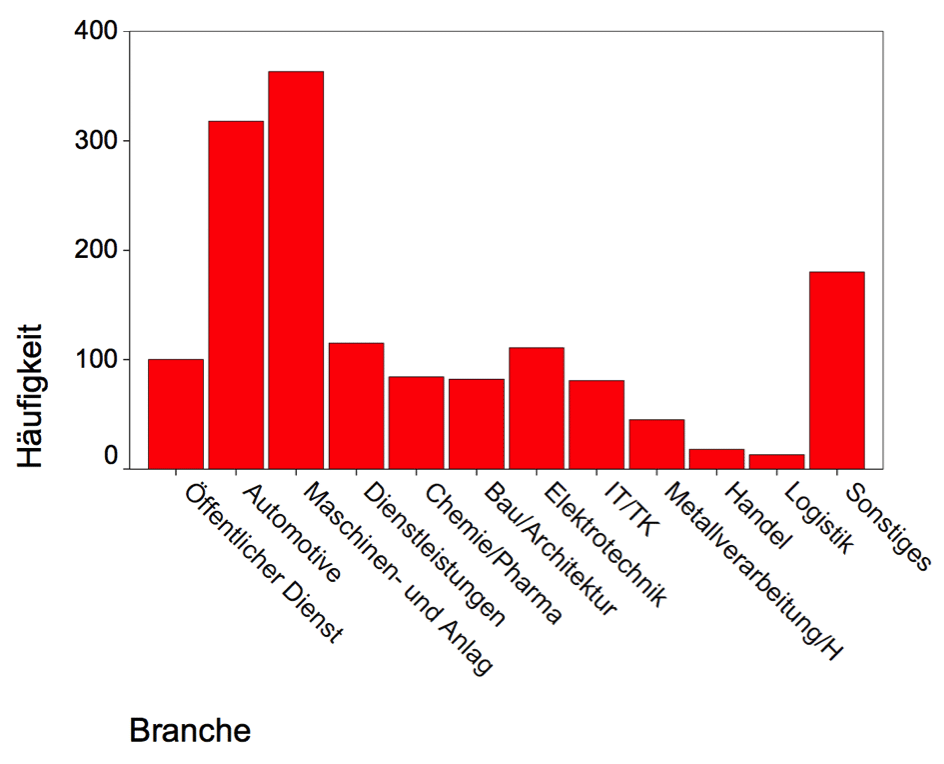
In total, more than 1,500 engineers took part in the Soft Skills Check in collaboration with VDI Nachrichten. The engineers were made aware of the initiative through the online and print editions of VDI Nachrichten. It was only after this large-scale test that it became possible to form a wide variety of clusters – for example, by gender or field of work.
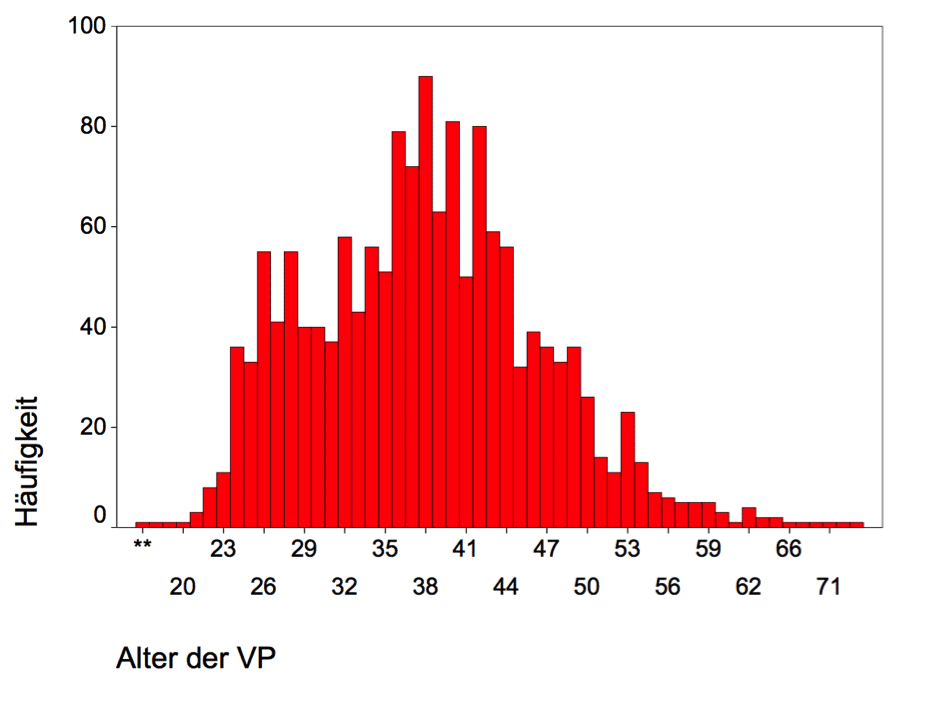
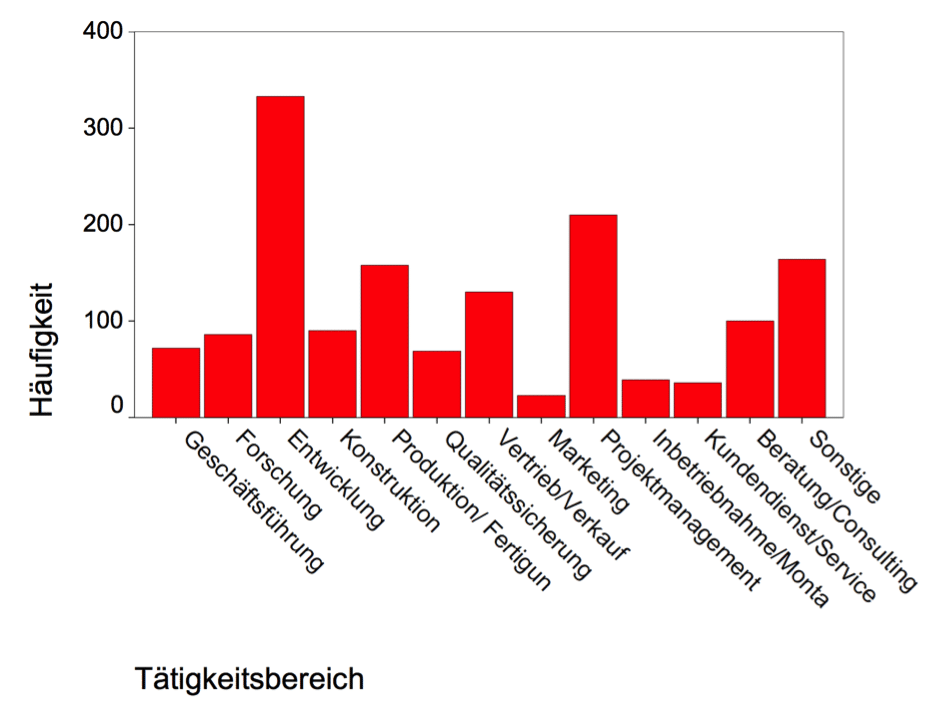
The figures above clearly show that the ‘Industry’ cluster illustrates the sectors in which engineers are employed. Engineers are predominantly required and employed in the automotive, mechanical engineering and plant engineering sectors. It is clearly evident from the ‘Field of Activity’ cluster that most engineers work in development. Project management comes in second place.
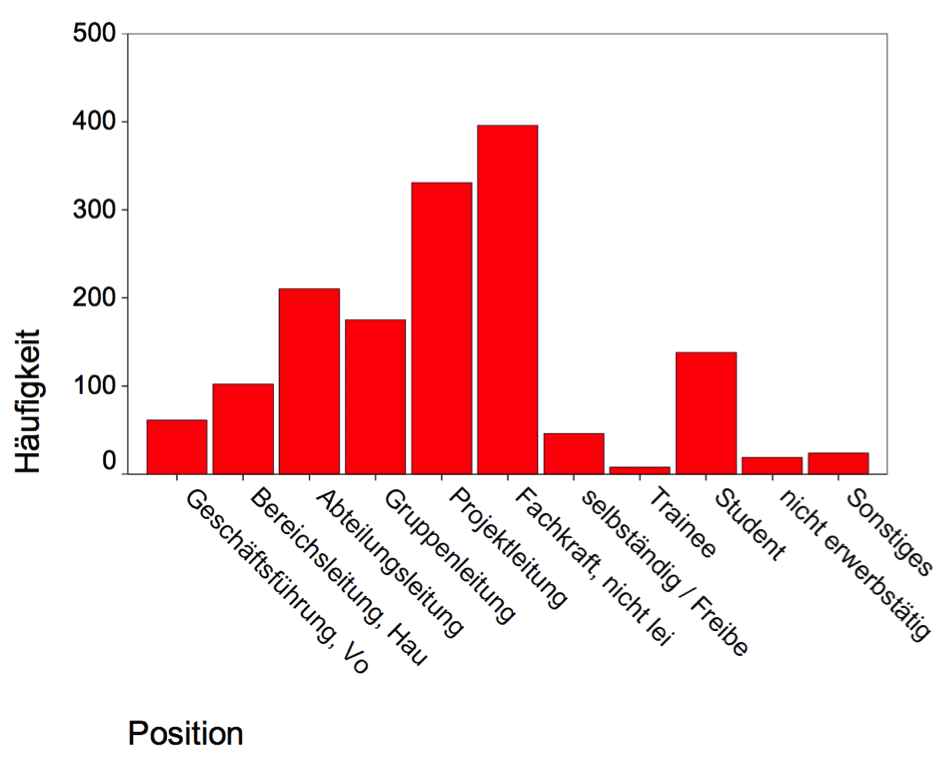
The majority of the participating engineers are aged between 30 and 45. This is also reflected in the organisational hierarchy. Many of the participants work as specialists or project managers. The ‘Hierarchy’ cluster can be used to conduct various analyses. For example, the hierarchy can be divided into specialist/technical staff, project management, departmental management and divisional/executive management. This classification allows the development of personality traits to be identified and distinguished.
The next article in this series will not only examine in more detail the personality traits that remain consistent throughout a person’s career, but also those traits that are key to a career in engineering. Do you know which areas of your personality need to be developed in order to build a successful career?
Image source:
Betz, Armin: Aptitude Testing in Practice – „An Engineer Remains an Engineer“, German National Library, 2015, p. 111 ff., ISBN 978-3-00-052093-8
After completing his degree in Automotive Engineering and Industrial Engineering, he began his career in the automotive industry in the fields of sales, development and marketing, and also spent a year in Japan working for one of the largest automotive suppliers.
He then moved to a world-renowned premium car manufacturer, where he served as a marketing officer responsible for product marketing in Japan and South America, and as a marketing officer responsible for marketing strategy in North and South America.
In 1994, he decided to set up his own business and founded a recruitment consultancy in Munich, which he has been developing and expanding for over 20 years. As managing director, his main areas of focus are, naturally, the automotive sector and mechanical and plant engineering.
His PhD in the field of aptitude assessment perfectly complements his areas of expertise, particularly with regard to HR and management consultancy. His thesis focuses on identifying and demonstrating typical personality traits among engineers, as well as defining areas for development to ensure a successful career.
These are scientifically derived and presented in the book *Aptitude Testing in Practice*.
At the same time, his focus is on building networks and cooperation models, as well as the ongoing development of systems and processes in HR consultancy.
Over the past 20 years in the field of HR consultancy, he has developed several brands that continue to operate successfully in the market to this day.
REQUIREMENTS FOR SENIOR MANAGEMENT WHEN ESTABLISHING A COMPLIANCE FUNCTION
One question that repeatedly arises in business practice is that of the scope for discretion in establishing and operating a compliance management system. In this context, a distinction must be made between decisions that are legally binding and those that are business-related decisions taken by senior management.
There is no room for discretion when it comes to complying with legal requirements. These must be complied with without exception. These are binding decisions.
When it comes to defining and implementing organisational measures, however, there is certainly scope for discretion. After all, company management does not usually regard ensuring compliance with laws and regulations as one of its primary responsibilities, but rather delegates this to a specific group of individuals whilst setting out the organisational framework. Even monitoring and control can be delegated to supervisory staff. In this respect, these are core management and organisational tasks that fall within the scope of corporate responsibilities – and there is undoubtedly scope for corporate discretion in this regard.
The following requirements apply when establishing a compliance function:
Organisational requirements
Liability for breaches of the law does not constitute strict liability. Liability rests with the company’s management personally if they fail to take appropriate organisational measures. Case law[1] This is based on the assumption that company management has a duty to put in place the organisational conditions necessary to ensure that the compliance officer can actually fulfil their duty to prevent compliance breaches. The scope of this duty is linked to the size and structure of the business. Case law does not provide further details on the „how“ of a compliance organisation, which suggests that it regards the establishment and organisation of a compliance function as an inherent corporate responsibility.
The key organisational requirements include – in addition to the aspects already mentioned regarding staff allocation, organisational integration, definition of responsibilities and Control / Monitoring – integration with other management functions within the organisation. These include, in particular, general risk management, quality management, as well as financial control and internal audit. The form this integration takes depends on the organisational structure; however, it is essential that the compliance function does not operate as an isolated „stand-alone solution“.
Requirements for monitoring and control
In principle, the organisational structure in place (both within the meaning of Section 130 of the OWiG and Section 43 of the GmbHG) requires appropriate supervision and monitoring of the persons to whom the duties of the compliance function have been delegated. Random checks on staff therefore constitute a fundamental function of the company’s organisational structure.
However, the monitoring and control measures must be practicable and reasonable. The exact limits of what is practicable and reasonable are not clearly defined. They are likely to be exceeded, however, if the intensity of the monitoring and control is so great that it effectively amounts to the supervisor carrying out the supervised party’s own tasks. This would effectively undermine the right to delegate tasks.
Requirements for investigations and enquiries
The lawsdiscussion[2] assumes that – although no explicit obligation to do so can be inferred from the law – a company will then implement internal Investigations / Inquiries must initiate where there are concrete indications of a breach of the rules, even if these indications do not arise from the regular, ongoing monitoring carried out as part of the compliance function’s remit. If the compliance function identifies breaches of the rules in the course of its regular activities, an appropriate investigation must undoubtedly be launched so as not to call into question the very purpose of the compliance function.
Summary and Outlook
A sense of proportion is required when designing, implementing and operating compliance management systems. Cost considerations, on the one hand, and the issues of organisational proportionality and internal acceptance, on the other, are compelling arguments for implementing not what is possible, but what is necessary within the compliance function. The permissible exercise of corporate discretion should therefore also be applied in this context.
However, this leeway must not obscure the fact that the implementation of a compliance management system is a business imperative, as the mere absence of such a compliance function can in itself give rise to personal criminal and civil liability on the part of the company’s management.
Dealing with a compliance management system is a complex undertaking and requires expertise across a range of different disciplines. On the one hand, a legal perspective is necessary; however, viewed in isolation, this is not sufficient. Breaches of regulations can occur anywhere within the organisation. Therefore, in-depth knowledge of organisational structures and of how functions and processes interact is essential in order to identify and define the requirements for an adequate compliance management system within the context of the organisation’s specific risk landscape; and on this basis, the appropriate measures for establishing and implementing the CMS are then derived and put into practice. Furthermore, knowledge and experience of other management systems, such as risk or quality management systems, is beneficial in ensuring the necessary integration of systems within the organisation.
Eckart Achauer studied law and business administration, followed by postgraduate studies leading to a Master of Business Administration (MBA). He undertook further professional development alongside his work to qualify as a European Quality Manager (DGQ), a mediator specialising in commercial mediation, and a Certified Compliance Manager (TÜV).
He spent around 10 years in the international insurance industry, holding various management positions within a Swiss insurance group (claims department, sales, assistance), before moving into management and business consultancy in 1997.
As a consultant and managing director of various consultancy firms, Mr Achauer has specialised in organisational and process optimisation, as well as in the development and implementation of management systems – quality management, risk management and compliance management.
At Senator Executive Search Partners, Mr Achauer is responsible for the Compliance Management division. As part of compliance audits, he analyses organisations„ “compliance fitness’, raises awareness and provides training for management, executives and staff, and supports companies in developing and implementing bespoke compliance management systems. In doing so, he always takes into account the specific risk profile of each company. Thanks to his many years’ experience as a manager and consultant, he is thoroughly familiar with the practical challenges faced by businesses.
They are coordinators, communicators, problem-solvers and (ideally) interculturally competent: international managers. Increasingly, cross-border responsibilities within companies operating internationally are being entrusted to them in order to manage the growing complexity of leadership.
What challenges does an international manager face? What requirements must they meet, and what expectations are placed upon them?
International managers are primarily selected on the basis of their professional qualifications. You carry out your duties drawing on extensive specialist knowledge; however, the necessary cultural background is often overlooked during the recruitment process. Yet an understanding of different cultural mindsets is hugely important for successfully collaborating with business partners from abroad. It is entirely wrong in this context to assume that a good command of English is enough to overcome all challenges. The importance of mastering the local language when working on international projects should not be underestimated. Certain nuances of communication can only be conveyed and understood in one’s mother tongue. Even a basic knowledge of the local language helps to create a pleasant atmosphere and demonstrates that you are treating your conversation partner with respect and as an equal.
As well as the necessary language skills, international managers should also be able to work well with people from different cultural backgrounds. This requires a great deal of tact and a high degree of empathy. Everyone is influenced by the prevailing values and views of their own cultural circle; international managers are no exception. In business interactions, one should under no circumstances project one’s own cultural background onto the people one is talking to. It is far more important to view a situation from the other person’s perspective, regardless of one’s own perceptions and judgements.
Case study
The case study below shows you what mistakes an international manager can avoid if they understand the mindset and culture of their negotiating partners.
Thomas L. is an international manager and is leading the partnership negotiations between a German plant engineering firm and a Russian company. During an initial meeting, he explains the upcoming procedures to his Russian colleagues, sets out key milestones and defines the processes. As his Russian colleagues do not object, he assumes that both sides are in agreement. A few weeks later, upon enquiry, he learns that the partner organisation has either not carried out the agreed steps and processes, or has not done so as apparently agreed. The Russian colleagues attribute this to unforeseen circumstances. Thomas L. is disappointed and wonders whether this behaviour is down to unreliability. Had Thomas L. had the necessary understanding of the Russian mindset, he could have avoided this situation. The fact that our Russian colleagues have not raised any objections simply means that nothing has yet been decided as far as they are concerned. Furthermore, the highly process-oriented nature of the explanations does not correspond to the more people-oriented Russian mindset. Furthermore, had Thomas L. possessed the necessary cultural understanding, he would not have mistakenly assumed that his cooperation partners would inform him of any delays of their own accord. Concealing or glossing over negative events is part of the deeply ingrained culture of saving face in Russia and many other Central and East Asian countries, in order to avoid painful confrontations for both sides. Furthermore, Thomas L. failed to take into account that he also needed to factor into the process the time required to build and maintain the business relationship.
Had Thomas L. prepared properly for the cultural idiosyncrasies of his Russian negotiating partners, he could have avoided this awkward situation.
How would you rate your intercultural competence?
Put your own intercultural competence to the test with our self-assessment. Our test does not assign a score on a scale; rather, it is designed to raise your awareness of the various dimensions of intercultural competence.
Professional expertise
How well do you know your own culture? Are you aware of the prevailing values and norms? How well do you know the culture of your destination country? What values and norms apply there? What is the historical background of the destination country? Are you familiar with the distinctive features of the destination country? List the key business characteristics of your home country and rank them in order of importance from 1 to 10. Check whether these characteristics also apply in the target country and what numerical value they would have there.
Social skills
How do you cope with stress? Would you be able to resolve conflicts in the destination country in line with local cultural expectations? Do you like the destination country and its people, or do you have a negative attitude towards them?
Self-efficacy
Are you aware of the paradigms that shape your world view? Which paradigms are culturally determined, and which are subculturally determined? To what extent do these paradigms influence your self-image?
Decision-making competence
Take a step back and look at your own culture objectively, and try to analyse it. Can you adopt an impartial perspective? What insights does such an analysis provide regarding the destination country? Do these insights help you to consciously shape your experience of the culture in the destination country?
In summary, it can be said that every country has its own economic, social and cultural characteristics. As well as language skills, taking these characteristics into account is vital for any international manager wishing to work successfully with business partners abroad. If you bear in mind the points we’ve covered in this blog post, it will prove its worth in your day-to-day work as an international manager. We wish you every success!
The complete series of articles entitled „The Roles of an International Manager“ by Sergey Frank has been published online in the Neue Zürcher Zeitung and can be HERE can be accessed.
In addition, recruitment consultant and bestselling author Sergey Frank had already presented in a HANDELSBLATT COLUMN, on how companies should best conduct themselves abroad.
Candidates value working with recruitment consultancies and view the experience positively overall. The recruitment experts at HR Consult Group AG were able to confirm this assumption in a recent survey.
For the survey, 518,653 candidates who had already been in contact with recruitment consultants were asked to answer 38 questions on the topic of „recruitment consultancy“. With over 10,000 responses, this is the first time that a meaningful picture of candidates’ views on the service and image of recruitment consultancies has been captured. For the first time, candidates also answered open-ended questions about their wishes, ideal scenarios and current experiences when dealing with and working alongside recruitment consultancies.
1. Recruitment consultancies as advocates and points of contact for candidates – a win-win situation!
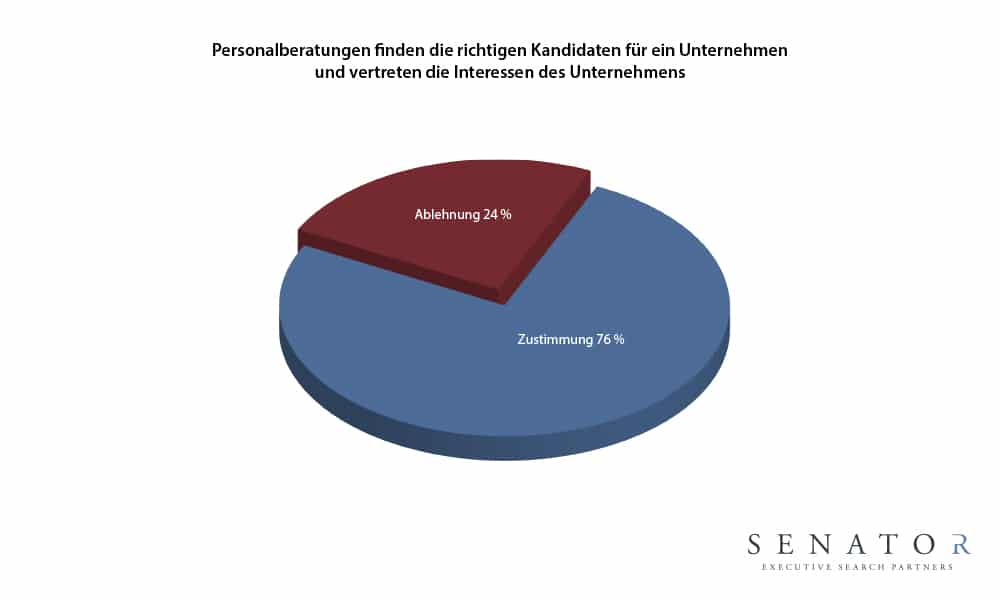
The candidates surveyed view collaboration with recruitment consultancies very positively. On average, 76 % stated that recruitment consultancies find the right candidates for a company and represent the company’s interests.
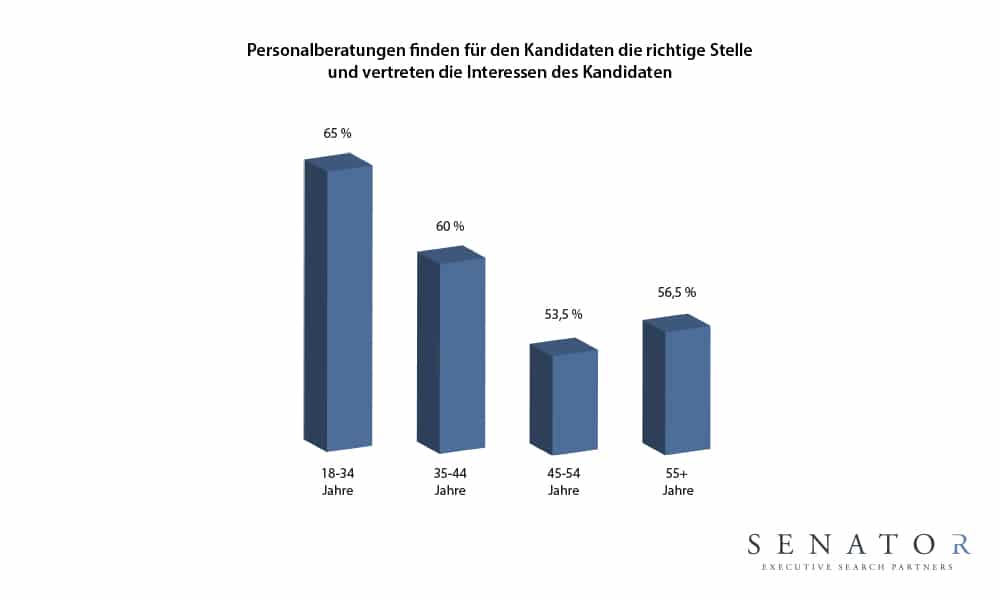
From the candidates’ perspective, an average of 48 % said that recruitment consultancies find the right job for them and represent their interests. It is worth noting here that almost two-thirds of young candidates (aged 18–34) regard recruitment consultancies as their advocates and the ideal point of contact for their own job search.
Mr MATTHIAS BARHAINSKI, authorised signatory at Senator HR Management GmbH, describes the image of recruitment consultancies from his perspective as follows:
„It is clear that, in this age of digitalisation, companies’ expectations of future employees and candidates’ expectations of a new employer are becoming increasingly wide-ranging. As a recruitment consultant, you can only be successful if you meet both sets of expectations; and, as a service provider, you are the one who represents the company to the outside world and the candidate within the company.”.
This is recognised above all by the younger generation of specialists and managers. They know that a recruitment consultant can represent a candidate more effectively and competently than the candidate could themselves, particularly when it comes to analysing the company’s requirements, but also when negotiating with the company.
After completing his degree in Automotive Engineering and Industrial Engineering, he began his career in the automotive industry in the fields of sales, development and marketing, and also spent a year in Japan working for one of the largest automotive suppliers.
He then moved to a world-renowned premium car manufacturer, where he served as a marketing officer responsible for product marketing in Japan and South America, and as a marketing officer responsible for marketing strategy in North and South America.
In 1994, he decided to set up his own business and founded a recruitment consultancy in Munich, which he has been developing and expanding for over 20 years. As managing director, his main areas of focus are, naturally, the automotive sector and mechanical and plant engineering.
His PhD in the field of aptitude assessment perfectly complements his areas of expertise, particularly with regard to HR and management consultancy. His thesis focuses on identifying and demonstrating typical personality traits among engineers, as well as defining areas for development to ensure a successful career.
These are scientifically derived and presented in the book *Aptitude Testing in Practice*.
At the same time, his focus is on building networks and cooperation models, as well as the ongoing development of systems and processes in HR consultancy.
Over the past 20 years in the field of HR consultancy, he has developed several brands that continue to operate successfully in the market to this day.