A management audit is defined as a systematic assessment or analysis of managers’ skills and performance potential. The focus is on the organisation’s needs and success. These audits are used, for example, when the management team needs to be assessed to determine whether it is up to the current challenges. What measures can be taken to strengthen the management team? Another application is in the context of integrating newly acquired companies. Do the management teams fit together? Such an audit can also support the targeted development of members of a talent pool. In addition, there are a wide range of other potential applications.
This article explains how to prepare for and carry out a management audit.
In order to meet the challenges of a management audit, certain preparations need to be made.
The first step is to define the objective of the audit. It must be made clear what the intended outcome of the management audit is to be.
Depending on the intended outcome, the company identifies the staff members who will take part in the audit. At the same time, the subject areas on which the company wishes to receive feedback are defined and discussed. A questionnaire is then drawn up for these areas, tailored specifically to the topics under review. Based on this information and these guidelines, the team of consultants who will carry out the management audit is put together. A central point of contact from this team is appointed as project manager, who is available to the company at all times.
The smooth conduct and evaluation of the management audit are based on a timetable agreed with the parties involved.
Once all the preparations have been made, the audit begins with an introductory briefing for the participating employees of the company. To start with, the participants complete an aptitude assessment. This is an online self-assessment tailored to the participant’s specific role. This self-assessment is benchmarked against recognised best-practice or standard profiles. The results of this benchmarking highlight the participant’s suitability, strengths and areas for development in relation to their current role.
As part of an extended recruitment process, multi-profile matching can be used to assess the candidate’s suitability for other potential roles.
Using the results of the aptitude assessment, structured interviews are then conducted in accordance with the specific questionnaire drawn up beforehand. In line with the dual-control principle, two experienced consultants always take part in each interview. The findings are discussed with the project manager.
If several teams of consultants conduct the interviews, the project manager will validate the results once again.
Key findings are also summarised by the project manager and presented to the company.
The second part of this topic will focus specifically on the evaluation of a management audit. How is the assessment carried out? Which findings are intended for staff, and which are important for the organisation?
As part of his officer training, he studied electrical engineering, graduating with a degree in engineering. Whilst working, he undertook a further course of study, graduating with a degree in industrial engineering, specialising in „Organisation and Planning“ and „Marketing“.
After his career as an officer, he moved to a subsidiary of EADS in Paris, where he was responsible for international marketing, communications, trade fairs and exhibitions for several years.
Back in Germany, his career at a technology company took him from the Strategy department to head of a product division, and eventually to the executive board. There, he was responsible for sales, technical studies, strategy and business development.
In 2010, he joined Rheinmetall to take up the post of COO at one of its subsidiaries. After two years, he was appointed divisional head, taking charge of a division with 2,500 employees. This phase was rounded off by extensive and successful restructuring programmes in Germany and Switzerland, the successful establishment of a joint venture in the USA, and his representation on several political and technological committees.
He drew on the experience he had gained in the fields of technology and general management to take up positions on the supervisory boards of both HR Consult Group AG and the technology company MECOMO AG. Having supported the strategic development of HR Consult Group AG over several years, he was then convinced to take up the position of Executive Board member at HR Consult Group AG. For one thing is key: „It’s all about people.“
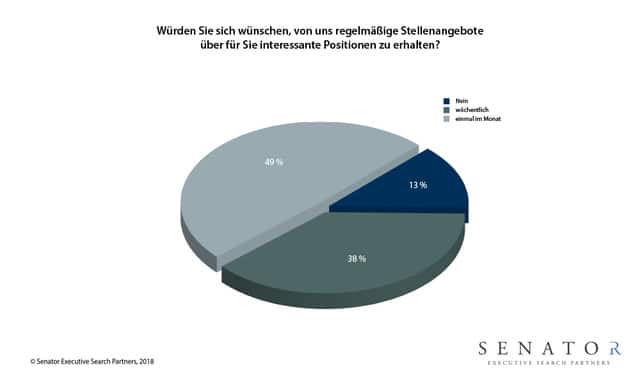
Would you like us to keep you regularly informed about interesting job vacancies? This was one of the questions the HR experts at HR Consult Group AG sought to answer in a survey that received more than 10,000 responses. The aim of the study is to identify the needs and preferences of candidates and to gain an insight into their views on the service and image of recruitment consultancies.
At 49 per cent, just under half of those surveyed would like to receive information about current and suitable job vacancies once a month. 38 per cent of candidates – more than a third – would even prefer to receive weekly updates.
This shows that even candidates who have not currently applied for a specific role would like to be kept informed of new job vacancies on an ongoing basis. With a total of 87 per cent, the service therefore meets with broad approval amongst the target group. Only 13 per cent reject this service.
„The candidates“ strong need for information clearly demonstrates just how important it is for recruitment consultancies to offer a good service. It is important to strike the right balance: if candidates receive information too frequently, they can quickly feel pressured or harassed. Conversely, if they hear too little from their recruitment consultancy, this can easily be interpreted as poor service. The recruitment consultant should therefore discuss each candidate’s specific information needs, as well as their preferred method and frequency of receiving information, on an individual basis in advance. This creates a pleasant and mutually beneficial working relationship for both parties,” explains Dr Armin Betz.
After completing his degree in Automotive Engineering and Industrial Engineering, he began his career in the automotive industry in the fields of sales, development and marketing, and also spent a year in Japan working for one of the largest automotive suppliers.
He then moved to a world-renowned premium car manufacturer, where he served as a marketing officer responsible for product marketing in Japan and South America, and as a marketing officer responsible for marketing strategy in North and South America.
In 1994, he decided to set up his own business and founded a recruitment consultancy in Munich, which he has been developing and expanding for over 20 years. As managing director, his main areas of focus are, naturally, the automotive sector and mechanical and plant engineering.
His PhD in the field of aptitude assessment perfectly complements his areas of expertise, particularly with regard to HR and management consultancy. His thesis focuses on identifying and demonstrating typical personality traits among engineers, as well as defining areas for development to ensure a successful career.
These are scientifically derived and presented in the book *Aptitude Testing in Practice*.
At the same time, his focus is on building networks and cooperation models, as well as the ongoing development of systems and processes in HR consultancy.
Over the past 20 years in the field of HR consultancy, he has developed several brands that continue to operate successfully in the market to this day.
Following the PREVIOUS PART Whilst the previous instalment in this series dealt with and introduced aptitude testing for engineers in general, this one focuses specifically on engineering-specific traits – in other words, the question of whether there are traits that typically characterise an engineer. Naturally, this also raises the question of whether such traits exist and, if so, which ones are responsible for career success.
In this analysis, it is necessary to identify both the personality traits that remain stable throughout an engineer’s career and those that change significantly in relation to age and position within the hierarchy. Only then can reliable conclusions be drawn about so-called ‘typical engineering traits’ and about the development of traits that are responsible for a successful career and progression up the career ladder.
The basis for this was the approach of looking for personality traits that remain consistent across all levels of the hierarchy. These would be traits in which an engineer rates themselves just as highly, whether they are just starting out in their career or acting as a manager.
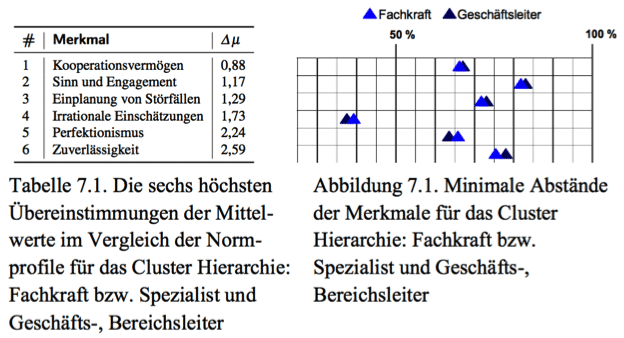
If the hierarchy is used as a basis for comparing different characteristics, it becomes clear that personality traits such as, for example, Reliability and Cooperation assets, which remain virtually unchanged throughout one’s career. But topics such as Perfectionism and Planning for incidents are personality traits towards which the engineer maintains the same attitude throughout his or her entire career.
The characteristics set out in Table 7.1 and Figure 7.1 illustrate the progression from the lowest to the highest hierarchical level, which show the least change. These characteristics are therefore the least affected by progression up the career ladder. It can therefore be concluded that the characteristics shown are those that are characteristic of an engineer – from the perspective of progression up the career ladder, i.e. the development over time during their professional career – as they remain virtually unchanged.
With regard to personality traits
Cooperative assets,
Purpose and commitment,
Planning for incidents,
Irrational assessments,
Perfectionism and
Reliability
If the engineers’ attitude does not change, it stands to reason that, as far as these personality traits are concerned, the saying applies: An engineer is always an engineer.
In the search for personality traits that are responsible for professional development and progression up the career ladder, the focus has now turned to identifying the traits that undergo the greatest changes over the course of an engineering career. To this end, the results for engineers working as specialists, project managers, department heads and business unit managers were compared. It was found that the personality traits in question had undergone continuous development across all hierarchical levels, meaning that, for the purposes of this analysis, it is sufficient to consider only the lowest and highest hierarchical levels.
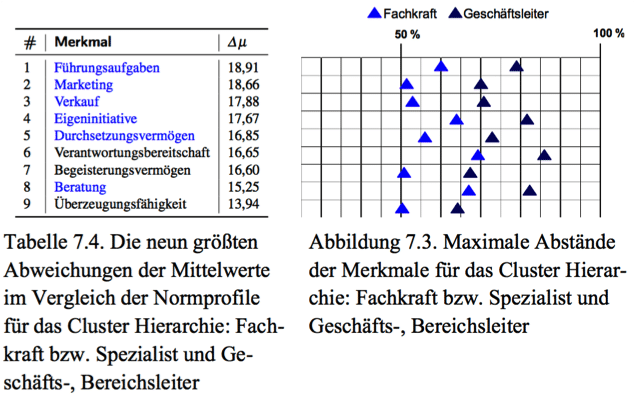
The table and diagram below show the personality traits that have changed the most from the lowest to the highest level in the hierarchy. Examples of these include Management responsibilities or Willingness to take responsibility.
These characteristics (Table 7.4 and Figure 7.3) show the greatest changes as they progress from the lowest to the highest hierarchical level.
For example, the significant shift in interest in Management responsibilities It therefore seems to be of paramount importance for successful progression up the career ladder.
It can therefore be concluded that the characteristics highlighted are those which, from the perspective of climbing the career ladder – that is, the progression over time throughout one’s professional career – offer the greatest potential for development for an engineer, as they are the ones that change the most.
A comparison of the areas of development / potential that emerge from the perspective of development over time (the „Hierarchy“ cluster) and the other, time-independent clusters – that is, the static differences between the individual norm profiles – reveals the following:
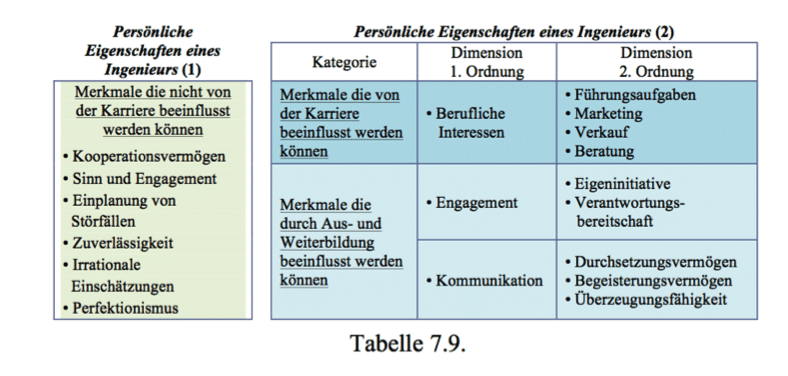
Table 7.9 shows a breakdown into first-order dimensions „Career interests“ and the first-order dimensions „Commitment“ and „“Communication' create. The former, as its name suggests, symbolises interests. As is well known, interests are not something that can be directly influenced, but rather something that takes shape and develops intrinsically.
Over the course of their career, engineers therefore develop interests that are sparked by their progression up the career ladder and continue to evolve, leading to a clear distinction in characteristics when comparing the standard profiles of „specialist“ and „manager“.
The situation is different when it comes to the characteristics of the other two first-order dimensions „Commitment“ and „Communication“: These are areas that can be improved through training and further education. As such, they can help you progress further in your career.
As part of staff development, therefore, personality traits and areas of interest should
Management responsibilities,
Marketing,
Consultancy,
Sales,
Initiative,
Willingness to take responsibility,
The ability to inspire and
Ability to persuade
be given special emphasis, addressed and further developed.
In summary, it can be said that a successful career depends not only on stable personality traits, but also on those traits that develop over the course of one’s career. Only when both are taken into account can the chances of a successful career as an engineer be maximised.
The next article on aptitude testing will look at standardised and best-practice profiles. These are required to interpret the results of any aptitude test. Do you know how standardised profiles and best-practice profiles are compared?
Image source:
Betz, Armin: Aptitude Testing in Practice – „An Engineer Remains an Engineer“, German National Library, 2015, pp. 165, 169, 174, ISBN 978-3-00-052093-8
After completing his degree in Automotive Engineering and Industrial Engineering, he began his career in the automotive industry in the fields of sales, development and marketing, and also spent a year in Japan working for one of the largest automotive suppliers.
He then moved to a world-renowned premium car manufacturer, where he served as a marketing officer responsible for product marketing in Japan and South America, and as a marketing officer responsible for marketing strategy in North and South America.
In 1994, he decided to set up his own business and founded a recruitment consultancy in Munich, which he has been developing and expanding for over 20 years. As managing director, his main areas of focus are, naturally, the automotive sector and mechanical and plant engineering.
His PhD in the field of aptitude assessment perfectly complements his areas of expertise, particularly with regard to HR and management consultancy. His thesis focuses on identifying and demonstrating typical personality traits among engineers, as well as defining areas for development to ensure a successful career.
These are scientifically derived and presented in the book *Aptitude Testing in Practice*.
At the same time, his focus is on building networks and cooperation models, as well as the ongoing development of systems and processes in HR consultancy.
Over the past 20 years in the field of HR consultancy, he has developed several brands that continue to operate successfully in the market to this day.
Successful companies demonstrate that those who know how to reduce staff absenteeism enjoy competitive advantages in the market, ranging from cost savings and reduced organisational burden to improved employer branding. However, one key factor in successful absenteeism management is often still not given enough recognition.
Psychogenic (psychologically induced) absenteeism: a serious problem
Increasing demands on employees in terms of flexibility and mobility, the intensification and consolidation of work, greater interconnection and cooperation between people and machines, and rising cognitive and emotional strain – all of this leads to psychological stress that many employees find difficult to cope with. The results are evident in the absenteeism and Health reports According to the Federal Government and various health insurance providers (e.g. AOK, DAK, TK), the number of days of incapacity for work, disability pensions and early retirement due to mental health issues is rising steadily. It is no coincidence that mental health risk assessments have been a legal requirement since 2014.
Absenteeism is costly: lost value creation, overtime, training time and, in some cases, excessive workload for colleagues compensating for absences, continued payment of wages, additional organisational effort, contractual penalties in the event of delivery difficulties and other opportunity costs. Of particular significance are the days of incapacity for work due to psychological causes (sick leave days) accounting for approximately 17 % of all sick leave days and approximately 38 sick leave days per case of illness (the average for all cases of illness is 13 sick leave days). Bearing in mind that sick leave days due to musculoskeletal disorders (approximately 22 % of all sick leave days, 20 sick days per case) – and, particularly within the main category of „back disorders“, are largely (partly) psychologically induced – the psychological component takes on even greater significance in terms of absenteeism. Sleep disorders are also relevant in this context. They have been on the rise in Western industrialised nations for years. Currently, around 35 million people in Germany suffer from them, which corresponds to 42 % of the population. Of these, 15 %–20 % require treatment. Around three-quarters of all sleep problems are psychogenic insomnia (difficulty falling asleep, staying asleep and waking up). Although the resulting absenteeism is relatively low, a 2017 DAK employee survey shows that 3.7 % of all employees did not turn up for work due to sleep disorders. Even when employees are present at work, sleep disorders cause major problems: not only is performance impaired, but the risk of accidents and injuries also increases, resulting in further absences which, however, are not statistically attributed to psychological factors.
How can psychogenic absenteeism be effectively reduced within a company?
Of course, the best way to do this is by changing the conditions identified as relevant. The 2017 baua study on mental health in the workplace uses a scoping review and staff surveys to identify the working conditions most relevant to mental health and sets these out in 4 subject areas structured as follows:
Work task
Working hours
Leadership and Organisation
Physical Environment and Human-Technology Interaction
The Focus lies in the workplace conditions. Changing these in such a way as to reduce pathogenic (disease-causing) influences and enhance salutogenic (health-promoting) factors is an absolute must, with no ifs or buts; unfortunately, this is often not addressed in workplace practice. One reason for this is that system-wide components need to be changed, such as: corporate culture, organisational structure and processes, staffing structure, remuneration systems, workplace design and ergonomics, the allocation of tasks and resources, leadership and working atmosphere, economic circumstances and job security, etc. This effort is often avoided.
Effective A key factor in resolving this problem is the fact that a large proportion of these „workplace conditions“ and „employee behaviour“ influence one another. Therefore, psychogenic absenteeism can also be reduced through measures that address the issue at its source: amongst employees at risk of taking sick leave. These measures promote salutogenic attitudes and behaviours, act as a preventative against psychogenic incapacity for work, and have a positive influence on health-related workplace conditions. These, in turn, have a health-promoting effect on employees.
A modular approach includes, for example:
Absenteeism analysis, tailored to the specific needs of each company.
Mental health risk assessment.
Setting S M A R T objectives.
Estimation of the cost savings achieved through reduced absenteeism and the expected return on investment.
Implementation and facilitation of health circles.
Salutogenic attitude and behaviour training for staff (focusing on the prevention of mental health risks and building resilience to psychological demands), using methods that take effect quickly, are easy to teach and can be readily integrated into everyday life.
Evaluation of the measures.
Design of a salutogenic sustainability strategy.
Practical example:
Situation: In a medium-sized service company, absenteeism in 2016 stood at just under 8.5 % of scheduled working time; in departments D and F, it was even over 12 %, with a proportion of affected staff exceeding 60 %. A voluntary staff survey carried out in these two departments revealed that more than three-quarters of all absences were attributed to mental health issues, psychosomatic conditions or back problems (despite very good workplace ergonomics).
Planning and Objectives: All staff in Divisions D and F should be encouraged to take part in a salutogenic training programme during the first half of 2017, with the aim of reducing total absenteeism by at least one-third in the second half of the year. Participants in the training should learn to understand and recognise psychological stressors, and to master preventive and salutogenic self-help techniques.
Cross-functional groups of an average of 15 people were formed, tailored to the organisation’s working structure. For each group, four half-day training sessions were scheduled at four-week intervals, along with individual coaching sessions arranged by mutual agreement and based on specific criteria, and a follow-up review after eight weeks. A total of 60 people were expected to take part. The direct labour costs for absences in these areas amounted to €235,000 per annum. (When adding indirect costs, a factor of 1.2–2 should be applied, according to sample calculations.) In accordance with the above-mentioned one-third target, savings of just under €40,000 of this €235,000 were to be achieved in the second half of 2017 and just under €80,000 in 2018 – a multiple of the investment in training.
Organisation, content and methods: At a kick-off event, which provided information on the psychological factors behind absenteeism, its negative personal and organisational consequences, and useful personal strategies, staff were successfully encouraged to take part in the training. Each training session comprised the following elements: setting personal goals, theoretical input, practical exercises and evaluation, covering the following content: a practical explanation of how psychological stress works, an understanding of salutogenic and preventive concepts, raising awareness of individual factors contributing to psychological stress, and mastering individual preventive and salutogenic self-help techniques. The methods used drew on: embodiment-oriented concepts, hypno-imaginative techniques, impact-based approaches, solution-focused counselling and systemic constellation work.
Evaluation: Amongst more than 90 % of staff, the subjective assessment of success 8 weeks after the end of the training ranged between 7 and 9 success points on a scale of 0 to 9. Measured absenteeism fell by 42 % between July and October 2017. This bodes well for 2018.
In addition to professional qualifications – the so-called „hard facts“ – „soft skills“ also play an important role in ensuring sustainable recruitment within a company. These are validated through scientifically sound aptitude assessments, which are a key focus at HR Consult Group AG. But when and where did aptitude assessment actually begin? How has it developed?
Throughout world history, there are many references to early pioneers of aptitude testing. One example is ancient China, where high-ranking civil servants were selected using a standardised selection procedure. Candidates had to demonstrate proficiency in the five arts and also prove their knowledge of rites and public ceremonies. The examinations were set to a very high standard, with the result that the proportion of candidates ultimately accepted was extremely low.
Sir Francis Galton (1822–1911) of England is recognised as one of the most important pioneers in the history of aptitude testing. He made a name for himself through his versatility across various disciplines. These included differential psychology, of which Galton was a co-founder. This field deals with the differences between individuals in terms of psychological traits and states. To this end, he developed testing methods capable of measuring psychological traits. He strove to quantify these traits as precisely as possible and focused on both intellectual abilities and personality traits. Throughout this work, he always kept his goal of improving the human race firmly in mind.
The principle, still used today, of describing people in terms of the deviation of their „measured value“ from the mean of a reference group was also developed by him.
From 1884 onwards, anyone interested could have their psychological traits assessed by him in London. Key features of this aptitude assessment included fundamental traits, such as observing behaviour whilst solving difficult tasks and assessing one’s self-image and how others perceive them.
The first methods of standardised personality assessment emerged at the beginning of the 20th century through empirical psychological approaches. This was followed by an increase in standardisation and systematisation. These early personality tests were mainly used to distinguish between well-adjusted and functional individuals and those exhibiting deviant behaviour.
The first personality tests, which originated in the United States, were intended for use in military psychological assessments or for addressing issues in clinical psychology. To a large extent, they measured psychological constructs.
The first career-related assessment methods began to be developed from 1920 onwards. These methods already focused on intellectual characteristics. They were used to determine suitability for a particular profession or to predict career success. The first significant test of this kind was developed at the Carnegie Institute of Technology in Pittsburgh. It was based on around 1,000 questions relating to various vocational interests, which continue to serve as a source for new tests to this day.
The use of clinically oriented personality tests for military purposes had already proved successful, which in turn led to the development of tests for psychopathological disorders (pathologically altered consciousness, memory and emotional or psychological functioning). The MMPI (Minnesota Multiphasic Personality Inventory) was devised specifically for this purpose. The California Psychological Inventory (CPI) was subsequently introduced as a procedure closely modelled on the MMPI, but which was primarily used for the selection of senior officers.
Our next article in this series will cover the subsequent course of events right up to the present day.
If you have any further suggestions or questions on this topic, please feel free to contact us at k.rasthofer@senator-partners.de
After completing his degree in Automotive Engineering and Industrial Engineering, he began his career in the automotive industry in the fields of sales, development and marketing, and also spent a year in Japan working for one of the largest automotive suppliers.
He then moved to a world-renowned premium car manufacturer, where he served as a marketing officer responsible for product marketing in Japan and South America, and as a marketing officer responsible for marketing strategy in North and South America.
In 1994, he decided to set up his own business and founded a recruitment consultancy in Munich, which he has been developing and expanding for over 20 years. As managing director, his main areas of focus are, naturally, the automotive sector and mechanical and plant engineering.
His PhD in the field of aptitude assessment perfectly complements his areas of expertise, particularly with regard to HR and management consultancy. His thesis focuses on identifying and demonstrating typical personality traits among engineers, as well as defining areas for development to ensure a successful career.
These are scientifically derived and presented in the book *Aptitude Testing in Practice*.
At the same time, his focus is on building networks and cooperation models, as well as the ongoing development of systems and processes in HR consultancy.
Over the past 20 years in the field of HR consultancy, he has developed several brands that continue to operate successfully in the market to this day.
The first part of this series looked at the early pioneers of aptitude testing. We will now follow the story as it unfolds up to the present day.
Following the development of the MMPI (Minnesota Multiphasic Personality Inventory) and the CPI (California Psychological Inventory), the use of personality tests rose steadily until the early 1960s, when it peaked and then gradually declined. More than 80 per cent of all large companies used personality tests to select sales staff. By 1984, this figure had fallen to just over a quarter of companies. The reasons for this were the interactionist theory advocated by Walter Mischel (the interaction of personal and situational characteristics) and growing public opposition to the tests. This led to an intense political debate about these methods, in which aspects of test fairness were a particular focus.
It was not until 1980, starting in the United States, that the subject was revived and began to gain increasing prominence. Both academic and practical interest was rekindled. A shift can be observed, from tests that were initially merely translated to methods developed in-house, confirming a continued rise in interest right up to the present day.
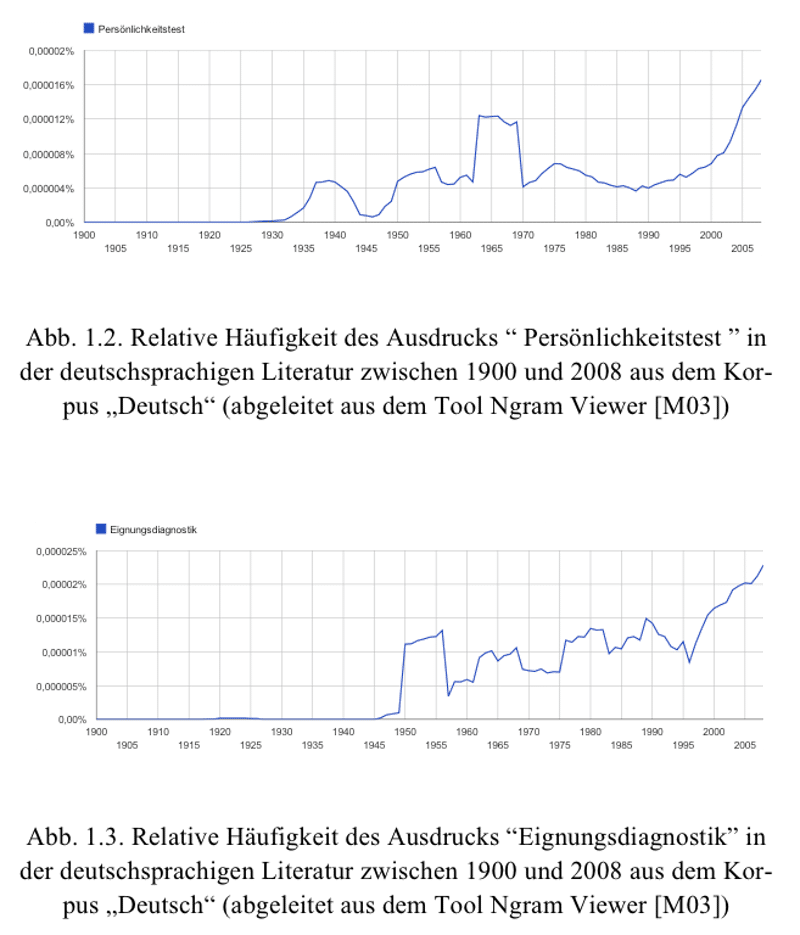
It is interesting to note that the frequency of the terms „personality test“ and „aptitude assessment“ in German-language literature between 1900 and 2008, as drawn from the „Deutsch“ corpus, reveals some differences, even though the two terms have similar meanings. This is illustrated by the following figure from the book *Aptitude Testing in Practice – An Engineer Remains an Engineer*:
Whilst the term „personality test“ gained recognition relatively early on, as early as 1930, the term „aptitude testing“ only became truly popular after the Second World War, in 1945. Since 1957, following a sharp decline, „aptitude testing“ has seen a steady increase, albeit with several minor fluctuations. In contrast, the „personality test“ has repeatedly experienced significant dips in its usage. There is, however, one thing they have in common. Both terms have shown a marked increase since 1996, a trend that is set to continue steadily. This means that both terms have firmly established themselves in the 21st century and are continuing to grow in popularity.
Nowadays, aptitude assessment is a collective term for work-related procedures designed to measure skills and behavioural tendencies. In principle, aptitude assessment is intended to provide as accurate a prediction as possible of a person’s likelihood of success or their suitability for a particular role.
It should be noted that aptitude testing has an impressive history, and its development is set to continue.
Outlook: Our next article on this topic will focus on the book *Aptitude Testing in Practice – An Engineer Remains an Engineer* by Armin Betz. Do you know what key and typical characteristics define an engineer? You can find out about these and many other aspects, such as the importance of areas of development, in the following article.
After completing his degree in Automotive Engineering and Industrial Engineering, he began his career in the automotive industry in the fields of sales, development and marketing, and also spent a year in Japan working for one of the largest automotive suppliers.
He then moved to a world-renowned premium car manufacturer, where he served as a marketing officer responsible for product marketing in Japan and South America, and as a marketing officer responsible for marketing strategy in North and South America.
In 1994, he decided to set up his own business and founded a recruitment consultancy in Munich, which he has been developing and expanding for over 20 years. As managing director, his main areas of focus are, naturally, the automotive sector and mechanical and plant engineering.
His PhD in the field of aptitude assessment perfectly complements his areas of expertise, particularly with regard to HR and management consultancy. His thesis focuses on identifying and demonstrating typical personality traits among engineers, as well as defining areas for development to ensure a successful career.
These are scientifically derived and presented in the book *Aptitude Testing in Practice*.
At the same time, his focus is on building networks and cooperation models, as well as the ongoing development of systems and processes in HR consultancy.
Over the past 20 years in the field of HR consultancy, he has developed several brands that continue to operate successfully in the market to this day.



#/media/File:Ming-Beamtenpr%C3%BCfungen1.jpg)